- "Let’s build the better world together"
One Africa Forum calls for urgent intervention on the insecurity in Nigeria, propose solutions and offers to partner.

Condolence Message on the Passing of Former President Muhammadu Buhari
July 14, 2025
One Africa Forum calls for an end to the war in Sudan, challenges the international community and commits to partnership to end the war.
November 21, 2025One Africa Forum calls for urgent intervention on the insecurity in Nigeria, propose solutions and offers to partner.
One Africa Forum — Public Statement
20 Nov 2025
Fellow Africans, friends of Nigeria, and the global community:
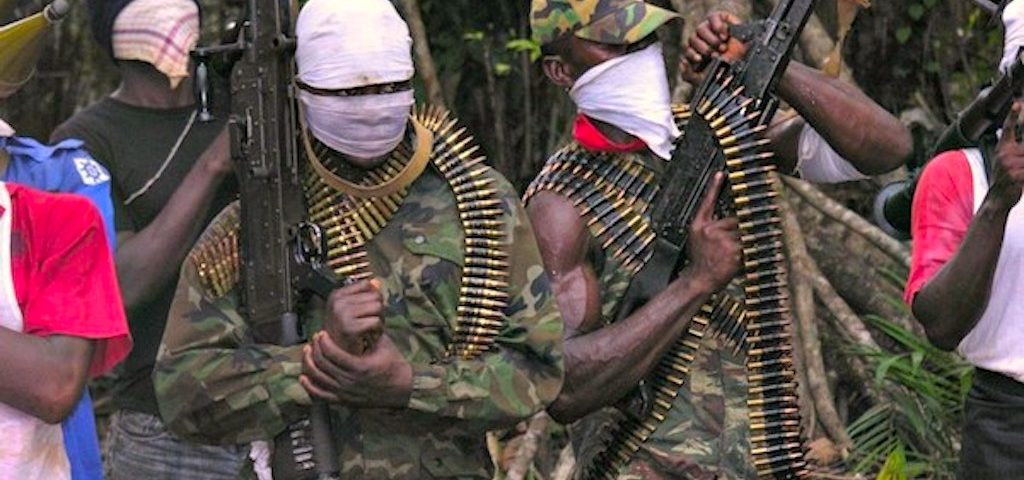
One Africa Forum watches with deep sorrow, grave concern, and a burning sense of urgency the accelerating spiral of insecurity in Nigeria. Recent events are not just headlines – they are a national emergency.
On 18 November 2025, gunmen stormed the Christ Apostolic Church, Oke Isegun, in Eruku, Kwara State, during an evening service. Three worshippers were killed, and more than 30 people were abducted.
In the same vein of violence, on 17 November 2025, gunmen attacked the Government Girls Comprehensive Secondary School in Maga, Kebbi State, abducting 25 schoolgirls and killing the vice principal.
These are not isolated tragedies. They are symptomatic of a failing system – a system that for years has grossly underestimated, ignored, or denied the full scale of the threat facing its citizens.
A Call-Out to the Nigerian Government
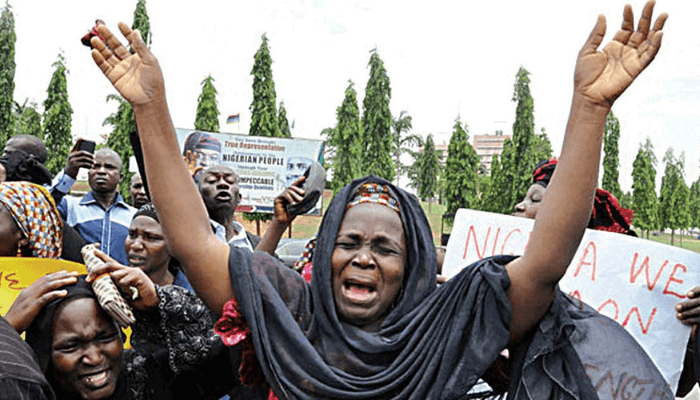
It is unacceptable that such terror continues to unfold in churches and schools, places that should be sanctuaries of faith and learning. The repeated denial or downplaying of this existential threat by Nigerian authorities is no longer tenable. For too long, the government’s response has been reactive, fragmented, and under-resourced. In many cases, communities have raised warnings – only to be met with silence or empty promises.
The government must adopt a no-nonsense stance, backed by concrete action. This means coordinating security across all clusters, local, state, national and collaborating with neighbouring countries, regional bodies, and the international community. The scale and sophistication of these attacks demand a holistic, synchronized response.
Moreover, recent warnings from outside actors – including those from U.S. President Donald Trump, should not be dismissed. The Nigerian government must take them seriously. These are not mere political statements; they reflect growing global concern. A strong government must be courageous enough to act, even when it means stepping on the toes of powerful and influential interests. Neutralising the scourge of insecurity will not be popular with everyone – but it cannot be defeated with half-measures.
We must ask: Is the Nigerian government courageous enough? Does it have the resolve to do what is right, rather than what is easy?
One Africa Forum’s Recommended Strategy: Seven Urgent Measures
Guided by our core values – solidarity, accountability, respect for human dignity, and peace – One Africa Forum proposes the following seven recommendations for the Nigerian government, in partnership with civil society and its international friends:
- Integrated Security Architecture & Intelligence Reform
- Establish a National Security Coordination Council, bringing together the military, police, intelligence agencies, state vigilante groups, and community leaders.
- Invest in intelligence capacity building: human intelligence (HUMINT), signals intelligence (SIGINT), and data analytics to map kidnappers’ networks, funding lines, and logistics.
- Precedent: Countries that have succeeded in counter-terrorism (e.g., Colombia’s coordination of security forces under a unified command) show how integration can disrupt even deeply embedded networks.
- Community-Based Prevention & Early Warning Systems
- Empower local communities by formalizing vigilante and hunter groups through registration, training, and accountability structures, so they can feed into formal intelligence channels.
- Establish early warning committees at the village and local government levels; these committees liaise directly with security agencies to report suspicious behaviors.
- One Africa Forum can help facilitate training, oversight, and periodically audit these bodies to minimize human rights risks.
- Demobilisation, Rehabilitation, and Reintegration (DDR) Programs
- Launch a national DDR initiative for surrendered or captured combatants, including ideological re-education, vocational training, and psychosocial support.
- Work with regional and international partners (e.g., ECOWAS, African Union, EU) to fund and monitor these programs.
- Precedent: Liberia and Sierra Leone successfully implemented DDR after their civil wars, reducing recidivism when supported by both local and international actors.
- Targeted Economic Development & Social Investment in High-Risk Zones
- Develop economic opportunity zones in states most affected by insecurity (e.g., parts of the North-West, North-East, Middle Belt), focusing on youth employment, education, and infrastructure.
- Create micro-grant funds and social enterprises to support agribusiness, small-scale manufacturing, and sustainable livelihoods, reducing the appeal of banditry as a source of income.
- One Africa Forum can convene public-private partnerships to catalyze investment in these zones, ensuring projects are community-led and culturally sensitive.
- Credible Negotiation & Justice Framework
- Establish a negotiation task force made up of government representatives, victims’ groups, civil society, and neutral mediators to deal with kidnappers who might be open to dialogue. But this must be matched by strict accountability: any release or amnesty must be conditional on clear cut-off of criminal activity.
- Simultaneously, strengthen judicial mechanisms: terrorism courts, specialized prosecutors, and witness protection to ensure kidnappers and church attackers are brought to justice.
- Precedent: In Colombia, peace negotiations with FARC were paired with a transitional justice mechanism – balancing reconciliation with accountability.
- International & Regional Cooperation
- Deepen collaboration with neighboring states (e.g., Niger, Chad, Cameroon) for cross-border intelligence sharing and joint operations.
- Seek technical and financial support from the international community, including multilateral institutions, to bolster Nigeria’s counter-terrorism capacity, DDR processes, and economic development programs.
- One Africa Forum stands ready to act as a bridge between Nigeria and regional/international bodies, facilitating dialogue, capacity-building, and resource mobilisation.
- Public Communication, Transparency & Reconciliation
- Launch a national campaign to publicly acknowledge and memorialize victims – in churches, schools, villages, as a way of validating their suffering and rebuilding trust.
- Mandate regular public briefings on security operations, progress, and challenges, so citizens are not left in the dark.
- Promote community reconciliation forums that include religious leaders, traditional authorities, and survivors, to foster healing and unity.
One Africa Forum’s Commitment
We, at One Africa Forum, are deeply invested in the stability and peace of Nigeria. We believe in an Africa where no child lives in fear, where places of worship are safe, and where education is a right – not a license for terror. We do not only condemn, we offer to partner:
- Strategically: We can support coordination between local communities and security agencies.
- Practically: We can help design and monitor DDR and economic programs.
- Moral & ethical leadership: We are willing to convene dialogues, mediate, and advocate for reconciliation without impunity.
We call on the Nigerian Government: do not let this moment pass. The blood of the innocent must compel action. The abducted girls, the murdered worshippers, the grieving families – they demand more than words.
Let us not wait until another attack shocks the nation. A courageous government will act now: firmly, decisively, and morally. That is what One Africa Forum demands, and what the people of Nigeria deserve.
In solidarity,
One Africa Forum