- "Let’s build the better world together"
THE VANGUARD BY ONE AFRICA FORUM

Introducing The Vanguard by One Africa Forum
April 27, 2026WordCampJoburg 2026 Johannesburg South Africa
October 16, 2026THE VANGUARD BY ONE AFRICA FORUM
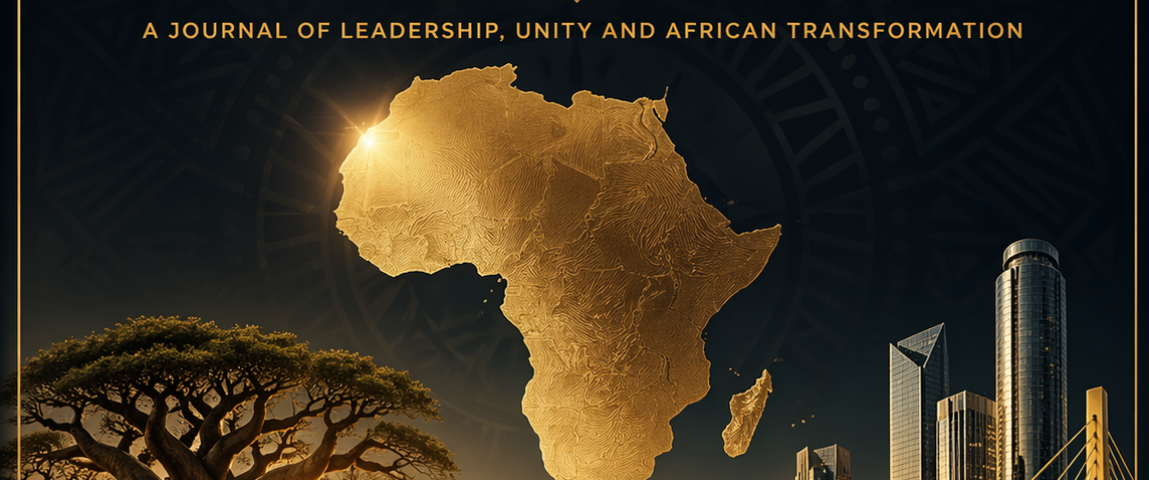
Volume 1 | Issue 1 | May 2026
A Journal of Leadership, Unity and African Transformation
AFRICA MUST ARISE!
A Continental Advocacy and the Cry of African Youth
By Abieyuwa Ufuoma
Contributor, The Vanguard by One Africa Forum
Editor’s Note
This inaugural issue of The Vanguard examines an urgent question for the continent: how should Africa respond in an age where sovereignty is contested not only through military and economic pressure, but through digital manipulation, political influence operations, and institutional vulnerability?
This essay combines policy reflection with civic advocacy, advancing the argument that Africa’s renewal depends on principled leadership, continental unity, and strategic self-determination.
Abstract
Africa has become a frontline in a new global contest shaped by digital manipulation, covert political engineering, and strategic influence operations. Drawing partly on the investigative report How Africa Became the Frontline of a Global Influence War (Alero, 2026), this article argues that Africa’s vulnerabilities are intensified when internal governance weaknesses intersect with external geopolitical competition. Using the biblical story of Joseph as a moral metaphor for betrayal, resilience, and restoration, the article calls for continental awakening across political, economic, digital, and moral spheres.
Keywords: African sovereignty, digital influence, Pan-Africanism, leadership, youth advocacy, digital sovereignty
1. Introduction
Africa is increasingly a theatre of geopolitical competition shaped not merely by traditional power projection, but by information warfare, covert political influence, and digital narrative manipulation.
As reported in Alero’s 2026 investigation for GhanaWeb, leaked documents suggest the existence of sophisticated influence structures operating across several African states through disinformation campaigns, embedded operatives, political influence tactics, and digital propaganda.
These revelations point to a larger strategic concern. As Africa grows in demographic, economic, and geopolitical significance, it also becomes more exposed to external competition seeking influence over governance outcomes, public perception, and strategic alliances.
The challenge before African states is therefore not only resisting interference, but strengthening institutions capable of protecting sovereignty in an era where power increasingly operates through narratives, data, and digital ecosystems.
2. Tactics of Influence: How Africa Is Being Reshaped from the Shadows
Disinformation and Manufactured Perception
False narratives, amplified through digital networks, can undermine democratic trust, distort public understanding, and destabilize electoral environments.
Security Penetration and Political Vulnerability
Attempts to cultivate influence within security and political structures represent a deeper threat than propaganda alone. They expose institutional weaknesses and raise serious questions about sovereignty resilience.
Digital Propaganda Networks
Coordinated digital messaging, inauthentic social amplification, and covert narrative shaping increasingly function as instruments of geopolitical influence.
Africa’s vulnerability in this arena is worsened by:
- Weak regulatory frameworks
- Fragile digital governance
- Under-resourced institutions
- High youth exposure to manipulated information ecosystems
Influence today is often exercised without invasion. It works through perception.
3. Leadership Betrayal and the Politics of Complicity
The Joseph narrative offers a powerful metaphor.
Joseph was betrayed by those entrusted with kinship. Africa’s contemporary challenge often reflects a comparable internal vulnerability: leadership failures can create openings for external manipulation.
The modern equivalents of “twenty pieces of silver” may appear as:
- Political arrangements that weaken autonomy
- Security dependencies that erode institutional strength
- Resource agreements that privilege elites over citizens
- Information systems shaped more by outside interests than domestic priorities
Where accountability weakens, sovereignty becomes negotiable.
Foreign influence often thrives where internal governance is compromised.
4. Africa’s Digital Prison: The New Chains
Africa’s dependence on foreign-controlled digital infrastructure raises profound questions of sovereignty.
As the African Union’s Agenda 2063 and UNECA policy work suggest, digital independence is no longer optional. It is strategic.
Without:
- African-owned digital infrastructure
- Strong cybersecurity systems
- Data governance protections
- Information literacy at scale
The continent risks forms of digital dependency that resemble modern political captivity.
Breaking these chains requires not isolation, but strategic capability.
5. Africa at a Crossroads
Africa faces two pathways.
One sustains dependency.
The other builds sovereignty through institutional strength, visionary leadership, and continental coordination.
Joseph rose not through dependency, but through wisdom, integrity, and strategic competence.
That remains a leadership model worth recovering.
6. A Cry from African Youth
Africa’s youth inherit immense potential, but also structural burdens:
- High unemployment
- Weak opportunity systems
- Debt-constrained futures
- Exposure to manipulated information environments
Yet this generation refuses political fatalism.
We refuse to be reduced to geopolitical bargaining instruments.
We call for:
- Accountability
- Transparency
- Sovereignty
- Leadership rooted in service
This is not a cry of despair.
It is a declaration of awakening.
7. Modern-Day Slavery Must End
Modern domination can operate through systems rather than chains.
Debt dependency, exploitative extraction structures, foreign-controlled digital ecosystems, and externally distorted political processes can all function as forms of constraint.
When futures are stolen rather than bodies, the moral question remains the same.
It must end.
8. A Call to African Leaders
Africa requires leadership that will:
- Protect electoral integrity
- Strengthen digital sovereignty
- Reform public institutions
- Reject exploitative alliances
- Invest in youth capability
- Safeguard natural resources
- Advance continental unity
The African Union and regional institutions must treat sovereignty protection as a strategic priority.
Conclusion: From Prison to Palace
Joseph’s movement from prison to palace offers more than metaphor. It offers a framework for recovery.
Africa’s future need not be defined by betrayal, manipulation, or dependency.
But transformation requires courage.
It requires leadership capable of resisting compromise.
It requires institutions that defend truth.
It requires a generation willing to rise.
Africa’s prison season need not be permanent.
A new chapter can be written.
And Africa can rise on its own terms.
References
Alero, A. 2026. “How Africa Became the Frontline of a Global Influence War.” GhanaWeb. Accessed April 23, 2026.
African Union Commission. 2023. Agenda 2063: The Africa We Want. Addis Ababa: AU Publications.
United Nations Economic Commission for Africa. 2024. Digital Sovereignty and Africa’s Future. UNECA Policy Brief Series.
The Holy Bible, New International Version.
These revelations point to a larger strategic concern. As Africa grows in demographic, economic, and geopolitical significance, it also becomes more exposed to external competition seeking influence over governance outcomes, public perception, and strategic alliances.